Key Highlights
- UPL Sustainable Agri Solutions introduced Ricebeaux, a smart early post-emergence rice herbicide developed over a decade of research.
- The product combines active ingredients Propanil and Penoxsulam to provide contact and systemic control of grasses, sedges, and broadleaf weeds.
- Designed as a ready pre-mix formulation, Ricebeaux eliminates the need for field tank mixing while offering high crop safety.
- The herbicide is suitable for both transplanted rice and wet direct-seeded rice cultivation methods.
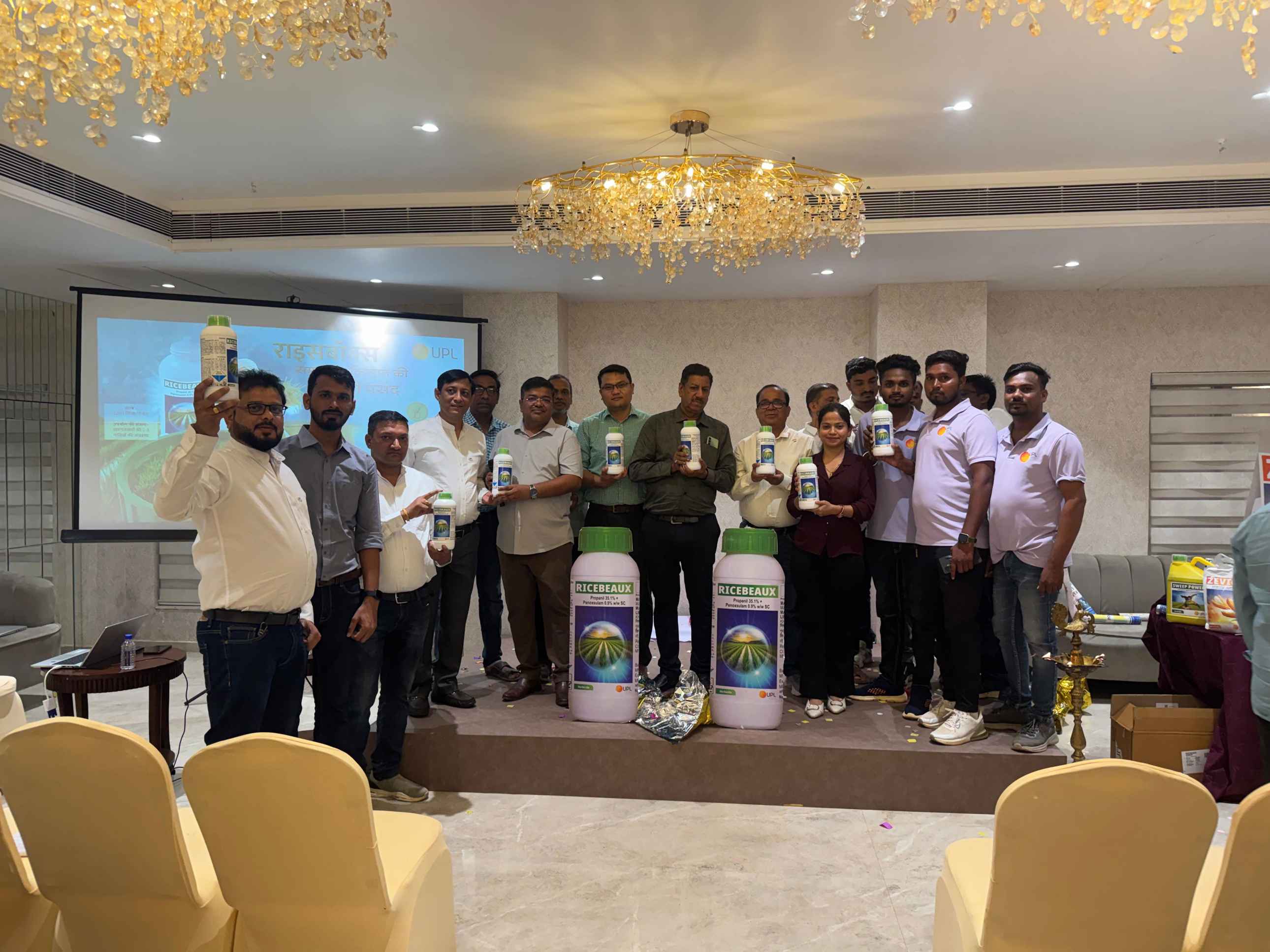
UPL Sustainable Agri Solutions has launched Ricebeaux, a smart herbicide engineered for modern rice farming. Developed over more than 10 years of dedicated research and development, the product underwent extensive multi-location trials across major rice-growing regions in India before its commercial release. The introduction strengthens the company’s crop protection portfolio for rice cultivation.
Rice growers face mounting weed management difficulties caused by erratic monsoon patterns and labor shortages. Rising labor expenses have driven an increased reliance on post-emergence herbicides, which frequently results in repeated applications, higher dosages, or complex tank mixes to achieve adequate control. Tough weed species such as Echinochloa crusgalli, Cyperus iria, and Cyperus difformis have become increasingly widespread and difficult to eradicate.
Ricebeaux addresses these field challenges as a broad-spectrum, systemic, early post-emergence herbicide. It delivers dual-action control by combining two active ingredients, Propanil and Penoxsulam, which possess distinct modes of action. This combination provides contact and systemic protection against major weed flora, including grasses, sedges, and broadleaf weeds, while assisting in herbicide resistance management.
The pre-mix formulation eliminates the requirement for tank mixing, simplifying field operations for farmers. It is formulated to offer high crop safety without causing stress to the plant, thereby protecting young crops and reducing competition during vital growth stages.
The herbicide supports multiple cultivation practices, including transplanted rice and wet direct-seeded rice (Wet DSR). For optimal results, application is recommended when weeds reach the 2 to 3 leaf stage. By offering broad-spectrum control in a single application, the solution aims to lower operational complexity, cut costs, and increase overall farm productivity.